Bluebell Campground
Doctor SleepBluebell Campground is an intermittently open resort in Sidewinder, Colorado, whose welcoming signs and rustic facilities conceal its central role as the True Knot’s refuge. Built on and around the grounds of the burned Overlook Hotel, it brings Dan Torrance back to the landscape of his childhood trauma and places the campground’s ordinary public face beside the group’s secret operations. Its significance lies in that overlap: a place advertised for meals, dances, and mountain views becomes a base from which the True Knot hunts Abra Stone, and the setting of Dan’s return to the site where his family’s history still presses on him.
Setting and the Overlook grounds
Travelers entering Sidewinder pass a sign proclaiming the town near the top of America. About twenty miles from the point where the Eastern Slope gives way to the Western, a dirt road branches north toward Bluebell Campground. A wooden arch announces the campground in western-hospitality language, but a gate is often closed, bearing a notice that it will remain so until further notice. The contrast between invitation and closure is part of the place’s ordinary appearance: visitors are welcomed in principle, while access is restricted in practice.
The campground occupies terrain Dan recognizes from the Overlook, which burned to the ground long before the events of the novel. In the former hotel landscape, a long, smooth lawn slopes toward the rustic Overlook Lodge, now used for dining and recreation. Farther uphill, the hill rises to the site where the hotel stood. That crest is now marked by a wooden platform and long flight of steps called Roof O’ the World. The distinction matters: the campground takes its name and facilities from the former resort grounds, while the old hotel’s exact hilltop site has become a state-administered visitor destination.
Other remnants and alterations sharpen the contrast between old and new. Midway up the slope, where the Overlook’s hedge animals once stood, a row of white satellite dishes has appeared. Beyond the platform, trails lead into the mountains; the views reach toward the highest peaks of the Rocky Mountains to the west and, on clear days, as far east as Denver and Arvada. The setting is beautiful, but Dan remembers the same landscape under the conditions of the Overlook’s last winter, when mounting snow eventually blocked the hotel windows. The open view and the remembered enclosure occupy the same ground.
A resort with an uncertain public face
Bluebell’s local reputation is shaped by the economic absence left by the Overlook. Residents of Sidewinder miss the business the hotel once brought to town and had hoped the campground might replace some of it. They understand that visitors in recreational vehicles do not spend like the hotel’s former guests, and the hoped-for revival has not occurred. The local consensus is that Bluebell functions as a tax shelter for a wealthy corporation, an enterprise expected to lose money rather than attract a steady stream of visitors.
When the campground is open, Overlook Lodge has a conventional resort routine. Its high-ceilinged, rustic interior once served as a restaurant offering breakfast and dinner. The kitchen prepared familiar dishes for campers, including meatloaf, macaroni and cheese, pancakes with syrup, chicken stew, and Tuna Surprise. After dinner, tables could be cleared for bingo or card games; weekend evenings brought dances. These activities belonged to the public-facing campground and took place only when it was open. The lodge’s ordinary uses make the building’s later role as a meeting place for the True Knot all the more striking: the same room that could host meals and dances is used for the group’s private business.
The True Knot’s concealed refuge
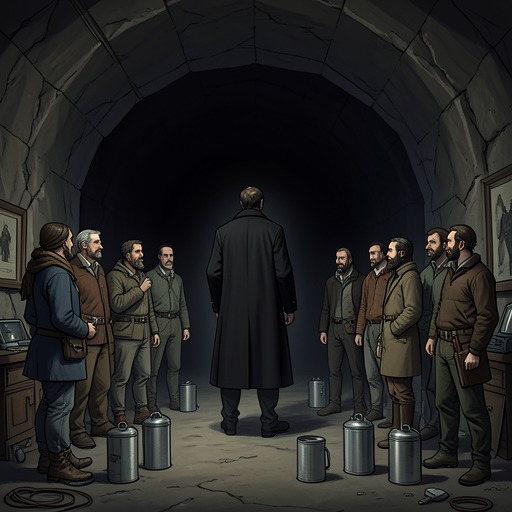
The campground is a haven, but not for the ordinary campers who might be expected to fill its large parking area. When the True Knot is in residence, its members’ recreational vehicles are the only ones there. Rose the Hat’s EarthCruiser stands out among them, a conspicuously large vehicle imported from Australia at great expense and converted for American roads. The intermittently closed property gives the group a plausible cover while limiting the chance that public visitors will overlap with its activities.
For Rose, the campground also supplies comforts after months on the road. She can use the women’s shower room alone, enjoying a long hot shower in a tiled space where the water does not run out after a few minutes. She sometimes showers in darkness, finding that solitude conducive to thought. That private routine places Rose inside the campground’s facilities while underscoring how fully the group has appropriated them: amenities nominally belonging to a public resort are available to its leader without the presence of other guests.
The location is also tied directly to the True Knot’s pursuit of Abra. After Rose leaves a supermarket parking lot, she drives toward the family-owned campground, which she regards as a beautiful place despite its violent history. Later, when Abra has identified the group’s base as Bluebell—or possibly Bluebird—in the town of Sidewinder, Dan understands why the name and location strike him so forcefully. He connects the campground with the place where the Overlook stood and recognizes that the escaped revenants of his childhood have led him back toward the same ground. The past is not merely recalled there; it helps identify where the present danger is lodged.
Dan’s return and the confrontation
Dan studies photographs of the campground on its website from Concetta’s study. The site is not designed to attract visitors, but its images give him enough to recognize the terrain. He recalls standing with his mother and father on the Overlook’s broad porch, looking down the lawn before winter storms closed in. He also remembers his father mowing the lawn and trimming the topiary. The web photographs turn a distant place into a legible family landscape, joining the campground’s current arrangement to Dan’s memories of the hotel.
The knowledge that the True Knot has settled so near the Overlook sharpens his sense of the ground’s character. Dan recalls John Dalton’s observation that an evil place would call evil creatures and considers its inverse: the same place might repel good ones. The campground’s poor reputation and thin public traffic acquire a second meaning in that light. Bluebell is not only a failed replacement for the hotel as a source of local commerce; it is a refuge whose proximity to the ruined Overlook suits the group hidden there.
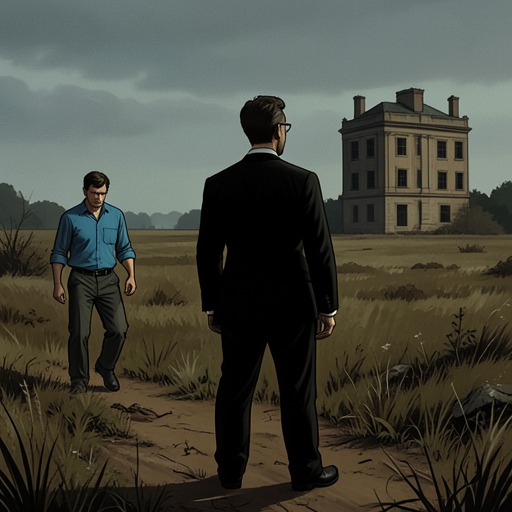
When Dan and Billy Freeman reach the turnoff, it is twenty minutes to four Mountain Time. They pass the entrance without slowing. The campground is marked closed, and the grounds appear empty, though Billy watches for anyone concealed near the welcome hut. Dan continues on foot through the heat and descends until the trees open onto the manicured lawn, tennis courts, RV parking area, and Overlook Lodge. Beyond the lodge, the land rises to Roof O’ the World, where a woman in a tilted top hat stands at the railing facing the parking lot. The arrival makes the geography immediate: the public campground, the lodge, and the old hotel’s hilltop site converge in one view, with Rose waiting above the grounds Dan once knew.